 Image 1 of 3
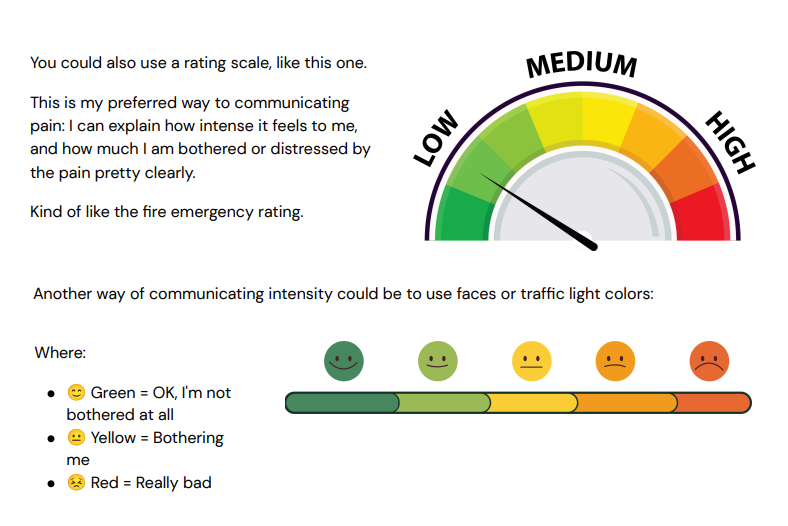 Image 2 of 3
 Image 3 of 3
The Pain Atlas is a sensory and emotional dictionary designed specifically for Autistic bodies, built to bridge the gap between what you feel and what the people around you (family, friends, and healthcare providers) actually understand.
Like any atlas, it's a map: a structured way to navigate an experience that can otherwise feel like carrying the weight of the heavens on your shoulders. You don't have to use it front to back. Jump to whatever page matches what you're trying to say right now.
Location, Location, Location — plain-language body regions and body-charting methods to show where it hurts
Time & Intensity — pain-log prompts, a 0–10 scale explained in Autistic-friendly terms, and an alternative "dial" and traffic-light rating system for people who find numbers hard to calibrate
Sensory Experience of Pain — an emoji + word reference table (sharp, burning, throbbing, tingling, cramping, and more) plus metaphor, texture, and colour-based ways to describe sensation when words alone don't fit
In Your Feelings — naming the emotional impact of pain (including alexithymia-aware language) with ready-to-use sentence starters
What Makes It Better or Worse — side-by-side aggravating/easing factors, and why these patterns matter to a care team
Impact on Daily Life — a life-areas table (mobility, self-care, routines, communication, sleep, and more) plus a support-type reference and sentence starters for asking for help
Tips for Family & Healthcare Providers — practical guidance on asking, waiting, and validating
Knowing Your Good Days (and Bad Days) — signs of regulation vs. signs you need support, so you can build a Flare-Up Plan before you need one
Companion toolkit links — Pain Body Chart, Pain Log & Tracking Sheets, Pain Management Flow Chart, Sensory Regulation & Body-Based Coping Tools, and a Flare-Up Planning Worksheet
This resource is written from combined physiotherapy training and lived experience, but it's general in nature. It's designed to help you communicate and understand your pain experience. not to diagnose, treat, or replace individualised care. If you're in a medical emergency, please contact emergency services.
The Pain Atlas is a sensory and emotional dictionary designed specifically for Autistic bodies, built to bridge the gap between what you feel and what the people around you (family, friends, and healthcare providers) actually understand.
Like any atlas, it's a map: a structured way to navigate an experience that can otherwise feel like carrying the weight of the heavens on your shoulders. You don't have to use it front to back. Jump to whatever page matches what you're trying to say right now.
Location, Location, Location — plain-language body regions and body-charting methods to show where it hurts
Time & Intensity — pain-log prompts, a 0–10 scale explained in Autistic-friendly terms, and an alternative "dial" and traffic-light rating system for people who find numbers hard to calibrate
Sensory Experience of Pain — an emoji + word reference table (sharp, burning, throbbing, tingling, cramping, and more) plus metaphor, texture, and colour-based ways to describe sensation when words alone don't fit
In Your Feelings — naming the emotional impact of pain (including alexithymia-aware language) with ready-to-use sentence starters
What Makes It Better or Worse — side-by-side aggravating/easing factors, and why these patterns matter to a care team
Impact on Daily Life — a life-areas table (mobility, self-care, routines, communication, sleep, and more) plus a support-type reference and sentence starters for asking for help
Tips for Family & Healthcare Providers — practical guidance on asking, waiting, and validating
Knowing Your Good Days (and Bad Days) — signs of regulation vs. signs you need support, so you can build a Flare-Up Plan before you need one
Companion toolkit links — Pain Body Chart, Pain Log & Tracking Sheets, Pain Management Flow Chart, Sensory Regulation & Body-Based Coping Tools, and a Flare-Up Planning Worksheet
This resource is written from combined physiotherapy training and lived experience, but it's general in nature. It's designed to help you communicate and understand your pain experience. not to diagnose, treat, or replace individualised care. If you're in a medical emergency, please contact emergency services.